All Categories
Featured

Table of Contents
They can track any info you provide, including individual information or if you ask forgiveness or confess to owing the financial obligation. Those statements could be used against you.
If you think a financial obligation collector is harassing you, you can submit a grievance with the CFPB. You can likewise call your state's chief law officer .
There are laws to prohibit debt collectors from placing duplicated or continuous telephone calls to annoy, abuse, or bug you or others who share your phone number. They're also prohibited from communicating with you sometimes or places that are troublesome for you. Usually, debt collectors can't call you at an unusual time or place, or at a time or place they understand is bothersome to you.
or after 9 p.m. The law also needs debt collectors to follow guidelines you give them about when and where you don't want to be gotten in touch with. If you do not wish to receive calls from a financial obligation collector at a particular time or location, such as on the weekends or at work, you must inform the debt collector.
A Guide to Financial Recovery for 2026
The Fair Debt Collection Practices Act (FDCPA) prohibits financial obligation collectors from placing repeated or continuous phone call to you or having telephone conversations with you with the intent to annoy, abuse, or harass you. "Putting a phone call" consists of phone call that the financial obligation collector makes which go into voicemail.
Internal Revenue Service Insolvency Worksheets: A Guide for Tempe Debt Relief LocalsThe financial obligation collector is to breach the law if they put a phone conversation to you about a specific financial obligation: More than seven times within a seven-day duration, orWithin 7 days after taking part in a telephone conversation with you about the specific debt. Aspects such as the frequency and pattern of telephone call and voicemails might likewise be utilized to assess whether a debt collector complied with or broke the law.
There might be some exceptions to this, including if you provided them grant call more regularly. The limitations typically use per debt however in the case of trainee loan financial obligation depending on the realities multiple financial obligations could be counted together as one "specific debt," so the limits would apply to those financial obligations as a group.
What to Expect When Applying for Relief in 2026
Your state laws might also offer extra defenses, and you can contact your state attorney general of the United States's office for more information. If you're having an issue with debt collection, you can submit a grievance with the CFPB.
We investigate all brands noted and may make a charge from our partners. Research and financial considerations may affect how brand names are displayed. Not all brand names are included. Discover more. Financial obligation collectors are obligated to stop calling when a main demand has been made to cease communication. About 75% of consumers who have asked for the financial obligation collection calls to stop say that the phone simply kept on ringing, according to a recent survey.
The chilling data become part of a report released on Thursday by the Customer Financial Defense Bureau. The customer watchdog mailed out over 10,800 studies to customers in 2014 and 2015 about their interactions with debt debt collector, and received about 2,000 responses. The results reveal that over one in four customers have actually felt threatened by the financial obligation collector that most recently contacted them.
About 40% of consumers surveyed by the CFPB stated they asked a lender or financial obligation collector to stop contacting them. Just one out of 4 individuals reported the debt collector in fact stopped.
Comparing Top Debt Settlement Companies in 2026
Debt collectors are expected to be prohibited from calling after 9 p.m. or before 8 a.m., however one-third of individuals in the study reporting receiving calls throughout these off hours. "The Bureau today casts light on uncomfortable problems in the financial obligation collection industry," CFPB Director Rich Cordray said in the brand-new report.

One-third of consumers, or about 70 million people, have been called by a creditor attempting to collect on a financial obligation in the past year, the CFPB states. To date, the CFPB has brought more than 25 cases versus debt collection companies that used deceptive or violent practices to recuperate funds.
In July, the firm released proposed guidelines that would strengthen consumer protections by limiting how frequently debt collectors can call consumers and needing these business to get the details right and offer an easy disagreement procedure. The CFPB is reviewing comments received on the proposition, and Cordray stated the firm will continue to consider other effective methods to reform debt-collection practices and stop the harassment swarming within the market.
Financial obligation collectors will purchase your financial obligation completely for cents on the dollar, or they might collect for the initial lender for a contingency charge. Financial obligation collection companies often compete to the majority of successfully gather debt on behalf of the initial creditor because they desire repeat company.
Procedures for Declaring for Personal Bankruptcy in 2026
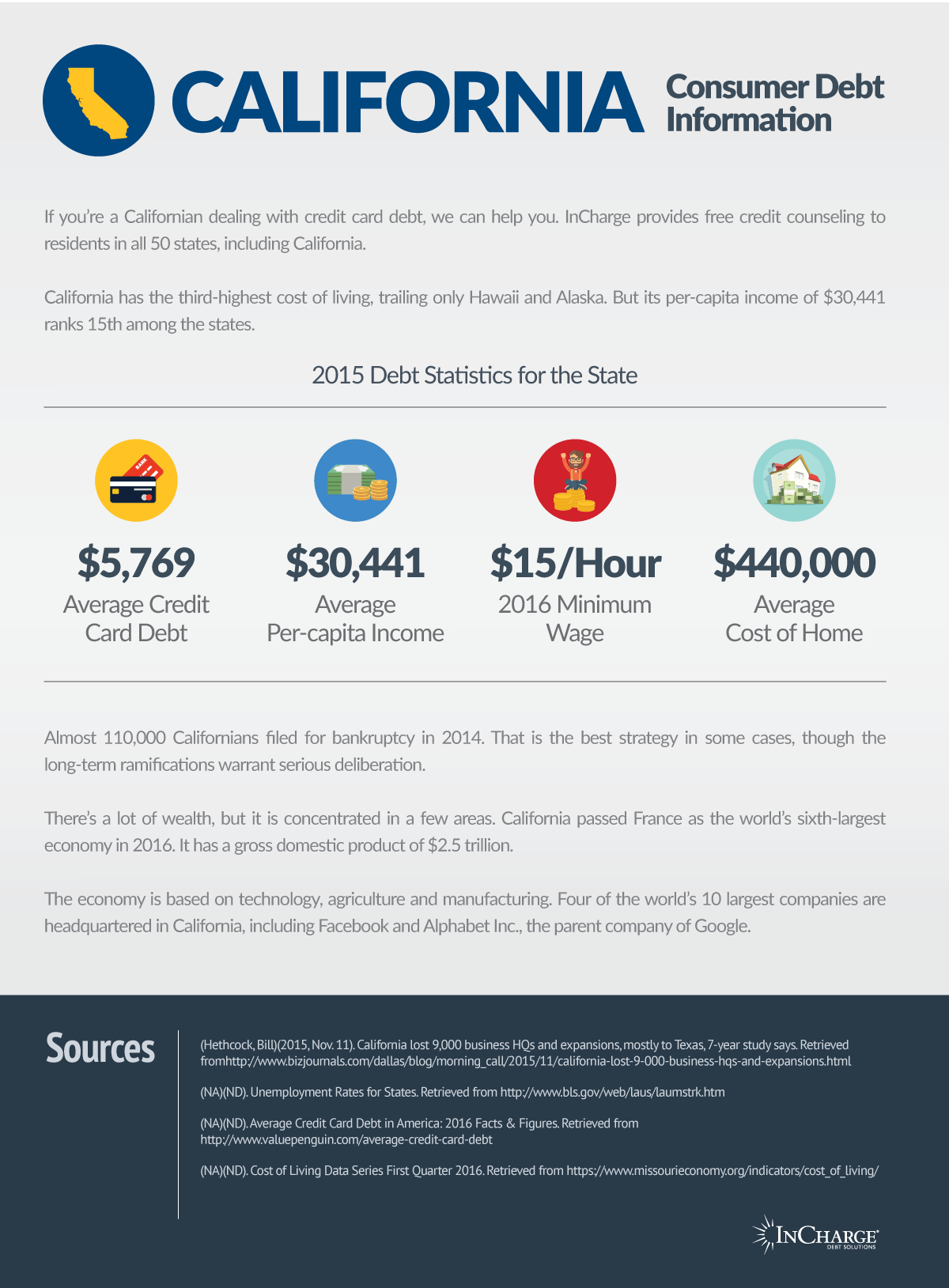
If you're dealing with harassment, a California financial obligation collector harassment lawyer can examine your case, assist you comprehend your rights, and take legal action to stop violent practices. The financial obligation collector will discover your contact details. They will then use it to contact you to speak to you about a debt.
They can even fear losing their job and other punishments (while debt collectors can sue you in court, they do not have any right to impose penalties). Consumers might receive communications from lots of financial obligation collectors throughout the lifetime of the debt. In time, one financial obligation collector might sell the financial obligation to another.
The issue is when the financial obligation collector resorts to doubtful techniques to collect the debt. Congress sought to address a specific growing issue relating to aggressive and abusive debt collectors when it passed the Fair Financial obligation Collection Practices Act of 1977 (FDCPA). Congress intended to strike a balance in between the interests of the financial obligation collectors, who still had a right to gather financial obligations, and the customer, who has a right to liberty from harassment.
Legal Changes for Debt Settlement in 2026
Financial obligation collectors may call repeatedly since they do not want to leave a message. Over time, many financial obligation collectors adopted the practice of calling consistently without leaving a voice mail message.
)
The phone can ring at an inconvenient time. Even seeing that a debt collector is calling you can stress you out. Seeing how motivated they are to reach you can include an additional level of distress. Federal companies have the power to make guidelines concerning debt collection. As relevant here, the Customer Financial Security Bureau published a rule that specifies harassment.

Latest Posts
What to Expect When Filing for Relief in 2026
Professional Debt Negotiation Strategies for 2026

Effective Ways to Settle Debt in 2026